
Mirroring Janitor AI on Chromecast and Smart TVs
Independent editorial guidance on compatibility, device settings, safety, and responsible use.
A television can make a long character reply easier to share with people in the room. The phone, tablet, or computer can still handle typing and navigation. “Como Transmitir o Janitor AI no Chromecast e Smart TV sem Atraso” expresses a common goal, but the delay you notice depends on the sender, receiver, network, and kind of sharing available. Use a neutral sample to find a setup that is comfortable for reading and easy to disconnect.
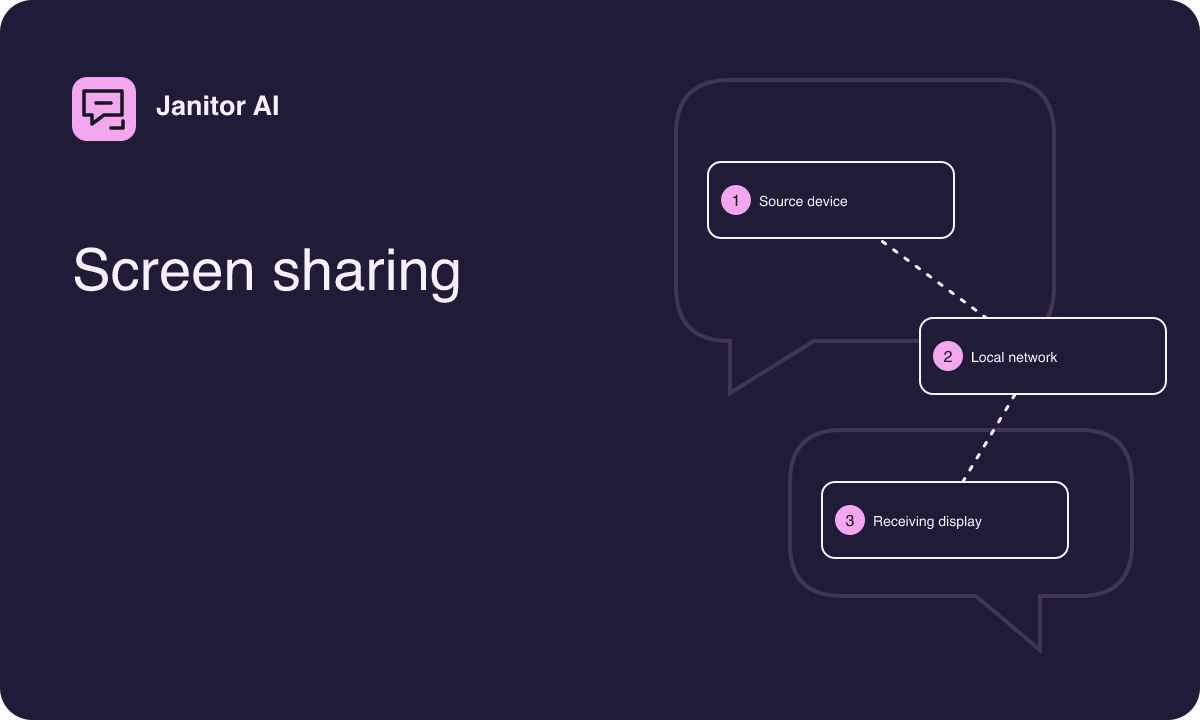
Choose what the television should show
Some devices and browsers support sharing a single tab. Others offer to mirror the entire screen. A service may also provide its own casting control if its documentation says so. A tab share can help keep unrelated material off the television. Full screen mirroring shows more of what happens on the sender, including app switches and possibly notifications. Read the sharing prompt and make sure it describes the view you intend the room to see.
Start with the display maker's instructions for the specific receiver you use. If a separate dongle or box is connected by HDMI, check that receiver's instructions as well as the television input. Find out whether your browser or mobile operating system supports a method the receiver also understands. Similar menu labels on different devices do not establish compatibility.
Set up the devices for discovery
Use the receiver's settings to learn its display name. If there are several screens with similar names, confirm which one is supposed to be visible in the room before selecting it. Follow the documented network requirements for the chosen method. A guest network may intentionally keep devices apart, while a household network may let a phone find nearby displays. If one device is managed by a workplace or school, use a permitted setup.
Check the TV input as well. You might have chosen the right casting receiver while viewing a different HDMI source. Walk through the initial test with a plain page that has no personal information. If the television does not respond but the sender says it is sharing, stop the connection and confirm the receiver name and input before trying again.
Start and end with a short test
- Open a neutral page in the browser or on the screen you plan to share.
- Use the sender's documented sharing control and select the intended receiver.
- Check the television for the expected page and read a few lines from where people will sit.
- Scroll and stop, watching how long the view takes to settle.
- Stop sharing from the sender and watch the TV return to its home view or previous input.
Once that sequence works, open the verified service through a route it supports and repeat it with a fictional conversation. If you plan to read aloud, try pausing between scrolls so the viewers have a stable line to follow. Keep a way to stop sharing within reach.
Tell display lag from response delay
Watch the sender and TV during one calm scroll. If the phone or computer moves first and the television catches up later, you are seeing delay in the display path. If both views show a waiting indicator before any new text appears, the wait occurs before the text becomes visible on the sender. That may have more to do with the page, the conversation, or the connection to the service.
Try one change at a time. Where the device documentation allows it, move the sender closer to the network equipment, pause other sharing activity on the sender, or compare another supported connection method. Repeat the same neutral scroll after each change. If the sender itself is slow to scroll in a long transcript, compare a short page. A faster receiver will not make the sender draw that page more quickly.
Tune the picture for reading from the couch
Increase text size on the sender and look at the actual line breaks on the television. System magnification can make text larger while narrowing the portion visible. Browser zoom can change the page layout and move the composer under a menu. If sorting out a line wrap takes more time than reading the text, try a different orientation or window size and compare.
A phone in portrait mode may leave empty space on either side of the TV image. That can still work well for a single column of text. Landscape mode may provide room for a larger transcript but display the keyboard across a bigger portion of it. Test the view before and while you type. If others are watching, review the response on your own device before scrolling it into view.
Protect the rest of the screen
End the share before switching to messages, photos, or personal tabs. Check notification preview settings and close unrelated windows before starting a full screen mirror. Someone entering the room might see a conversation that was appropriate for the original viewers. Use a neutral sample in settings where you cannot control who walks past.
For example, share a tab containing an imaginary exchange about a train timetable. Check that changing tabs on the sender leaves the intended view on the television in your chosen mode. Then stop sharing and reopen the sender's controls to confirm the connection ended. If switching tabs exposes other content during the test, use a dedicated window or choose another documented sharing option for future sessions.
Keep the setup repeatable
Record the receiver name, the sender you used, and whether you shared a tab or a screen. Write down any picture adjustment that helped, such as putting a tablet in landscape or increasing browser zoom slightly. If the receiver disappears later, start by comparing its input, network connection, and name with the setup that previously worked.
A useful result is one that serves the activity you have in mind. For shared reading, it may be enough for the picture to settle after each scroll. If several people want to write or edit at once, keeping the composer on the sender and using the television for occasional viewing may feel easier.
In a room with several receivers, it helps to agree on the receiver name before guests open their sharing controls. A test with a short, harmless page can also reveal whether the receiver adds a confirmation screen or leaves a casting icon visible. Show the person holding the sender where to stop the session. If the display still shows the final frame after you disconnect, use the receiver's normal controls to return to its home screen.